

How To Clean Piano Black Trim Without Scratching
One of the easiest updates we can practice in our homes is putting up a fresh coat of pigment. But, nix ruins new paint like brush strokes! I've already shared how to paint interior walls in 5 steps, and now I desire to turn our attention to trim! Here is the ultimate guide for how to paint trim without castor strokes in 5 easy steps.
This mail may contain affiliate links where I earn a small commission on your purchases.
How to paint trim without castor marks
Fifty-fifty though the process of painting trim is relatively uncomplicated, in that location are a surprising number of elements that go into getting a clean and smooth finish. New DIYers oftentimes grab the first tin can of paint they meet on the shelf and promise for the all-time. Just with these tips y'all'll go it correct the first time and avert any long term regret. Because I'll tell you what, yous do Non want to have to pigment your trim twice.
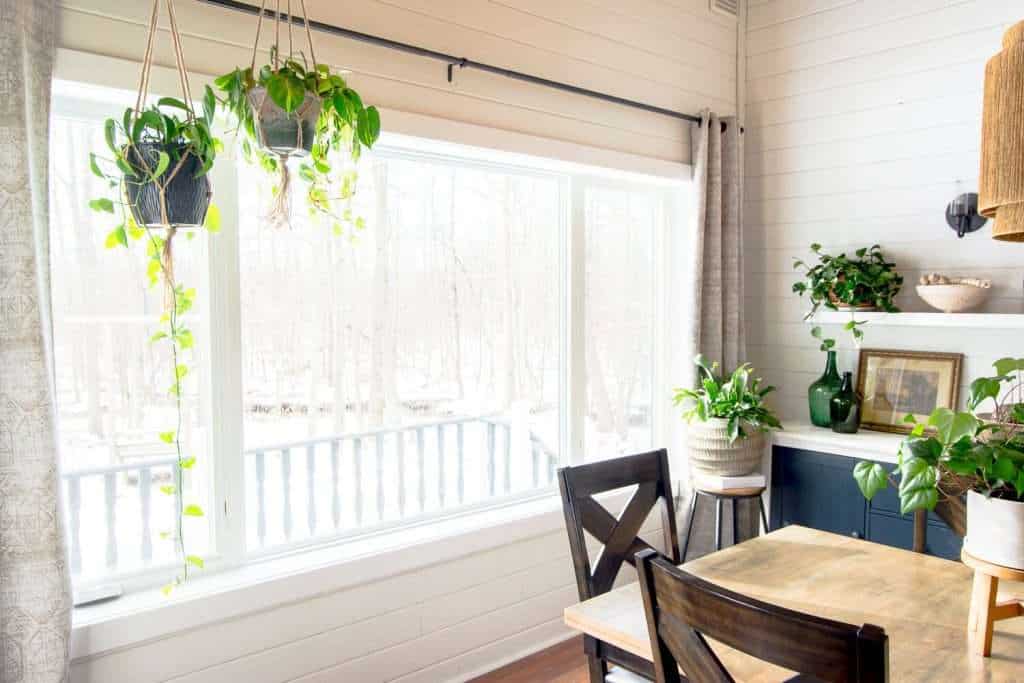
As I've painted all of the trim in our firm, I continuously received the question, "how do you paint baseboards without leaving brush marks?" Thankfully, the answer is uncomplicated and applies to all baseboards, trim, and door casings. Let's get started!
But actually quick, I have put together a gratis printable that helps you option the right paint every fourth dimension. Brand sure to bring together the customs to get your freebie!
Should you use a castor or a roller to paint trim?
Some people would recommend using a similar method to paint trim equally they use to paint walls. Cut in with a brush, roll on the middle. Still, I find that using a roller to paint trim is more work than it's worth. Typically, it is difficult to become clean lines when using two different tools on a small surface like trim work and baseboards.
It is easy to see where the brush left off and the roller started. Also, using foam rollers can leave a unlike texture on the surface than a brush, which just accentuates the lines.
So, while some people swear by this method, I recommend merely using a paint brush to paint trim!
What brush should I use to paint trim
A quality castor should be used to paint trim. There are several brands of paint brushes that I consider quality brushes, including Purdy, Zibra and Wooster. Overall, you want to make sure y'all buy a 2 to 2 i/2 inch angled brush for ease of use. I adopt soft bristles as well. The stiffer the bristles, the more than brush strokes you will see.
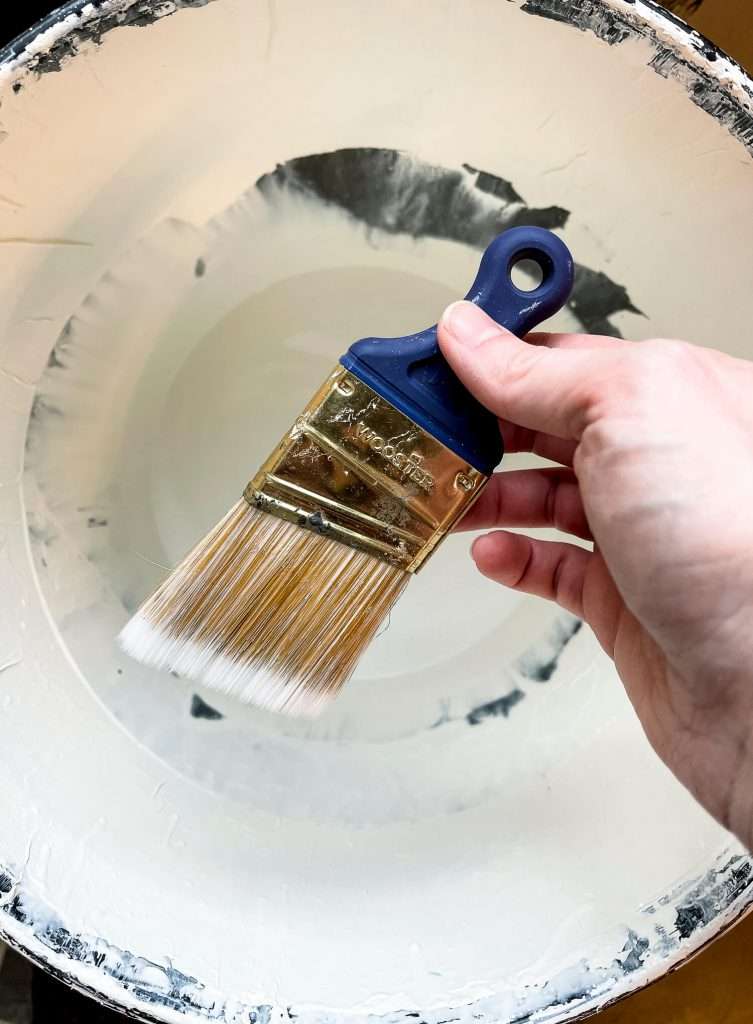
Still, which paint brush you use will depend on your own preference. These are the top 3 pigment brushes I'd recommend for trim.
- Purdy 2 Inch Angular Brush (Soft Beard): Great for those who prefer the traditional long handled brush.
- Wooster ii Inch Brusk Cut: This is my favorite brush! I love the shortened handle for like shooting fish in a barrel control and tight spaces.
- Zibra 2 Inch Palm Pro Trim Brush: This castor has a great release of pigment for smoothen finishes.
- Wooster 2 Inch Oil Based Paint Castor: If you decide to use oil based paint on your trim, go with this brush made specifically for oil based paints.
What type of paint should I use on trim and baseboards?
Speaking of oil based pigment, let'due south talk almost types of pigment! The blazon of paint should you use on trim and baseboards is based on a number of factors. First and foremost, your tolerance for oil based paint.
Using Oil Based Paint on Trim
Oil based pigment is an amazingly durable pigment selection which is perfect for painting trim. Once painted, your trim volition clean upward well, be extra durable, and have the smoothest finish.
All the same, the cons of using oil based paint for trim often cause people to opt for latex. Oil based paint is odorous and is a more than fourth dimension intensive clean up. Plus, once you've painted with oil based pigment, y'all should not paint overtop with latex as it won't adhere well. So one time you've chosen oil based paint for your trim, y'all're all in!
Using Latex Paint on Trim
While oil based paint volition requite you the smoothest finish due to information technology's longer drying time, many quality latex paints will offering bang-up results! As the painting industry continually improves, you'll find that latex paints are more versatile and durable than ever earlier.
If you cull to employ a latex pigment, start by making certain it is a reputable paint brand. Then, for an actress smoothen cease, consider adding a latex paint conditioner like Floetrol. This is optional, only adding a paint conditioner slows drying times for latex paint to brand it more comparable to oil based options, simply without the hassle and smell.
Using Ceramic Enamel or Urethane Alkyd Paint on Trim
I've grown very addicted of using ceramic enamel paint on trim and baseboards. Information technology comes in a semi-gloss or satin stop and dries to a difficult, durable finish. It dries quickly and offers easy make clean upwards. Our painter introduced me to this type of paint 2 years ago and it's been my go-to pick of paint for trim since!
Another similar pick is Urethane Alkyd Semi-Gloss Enamel. This provides a like terminate to oil based paint, simply with h2o make clean up. It is one of the nearly durable finishes and can also be painted on metal.
What sheen should I use on trim and baseboards?
Once yous determine what blazon of paint you'd like to utilise, it'southward time to decide what sheen to use on trim! The most common fault for new DIYers is using the wrong sheen on trim and baseboards. If you choose to use a apartment or matte sheen, then it volition be much less durable. And if you lot have kids or pets, baseboards and trim take a beating!
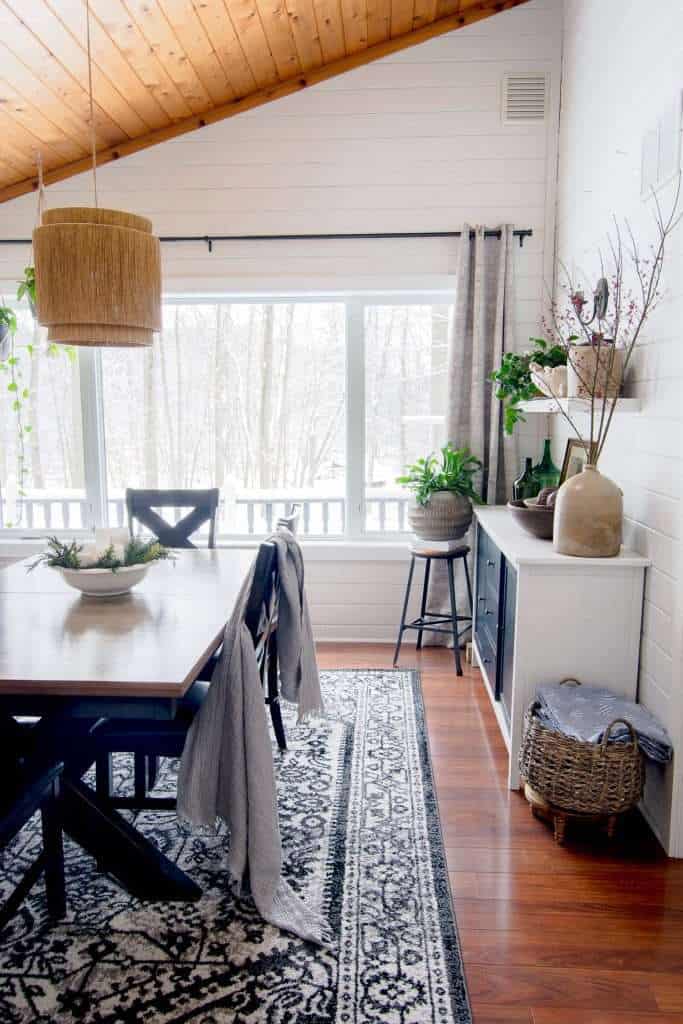
The most highly recommended sheens for trim are satin and semi-gloss. These are both durable options that clean upward well. Satin has a slight luster that is less bold, yet even so durable. Semi-gloss has a noticeable polish that helps trim work stand out more than.
If you want a assuming blueprint, you can besides apply gloss which will highlight architectural details well. However, take care when using gloss as it is less forgiving for dents in your trim and will accentuate flaws.
How to Paint Trim Without Brush Strokes
Now that we've covered some of the pre-painting basics, let'southward larn how to pigment trim without brush strokes!
Y'all'll desire to first by gathering your materials. Equally we've already discussed, the materials you choose volition determine how easily yous tin can paint trim without brush strokes. If you cull depression-quality brushes and paint, then your castor strokes volition be more visible.
Materials Needed to Paint Trim
- Sand paper: sanding blocks and 320 grit sand newspaper for finish sanding
- Woods putty to repair impairment
- Vacuum
- Tack cloth or sponge and water bucket
- Primer
- Paintable Caulk
- Quality Pigment Brush
- Pigment
- Painter'due south Record (optional)
Shop Painting Supplies
You can find all my favorite DIY painting tools rounded up for easy purchasing on my Amazon Storefront!
How Exercise You Prepare Trim for Painting?
Painting trim without brush strokes is possible due to your prep piece of work. You lot want the surface of your trim to exist as smooth as possible. Any high spots, splintering, or rough surfaces will show a different appearance in the paint and your brush strokes immediately.
- To brainstorm, repair any dents, marks, or cracks in the trim with wood putty.
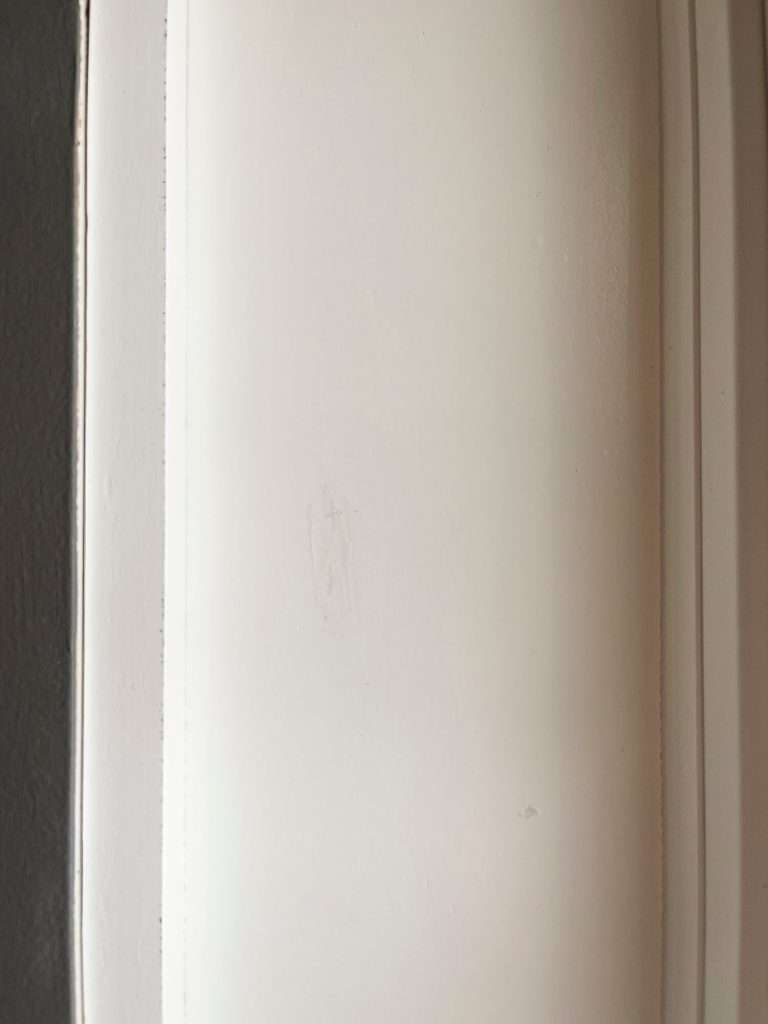
- Clean any residual or build up in the corners of window sills or on the top edge of baseboards by scraping with a putty pocketknife or razor bract.
- Sand repaired portions of your trim with a sanding block.
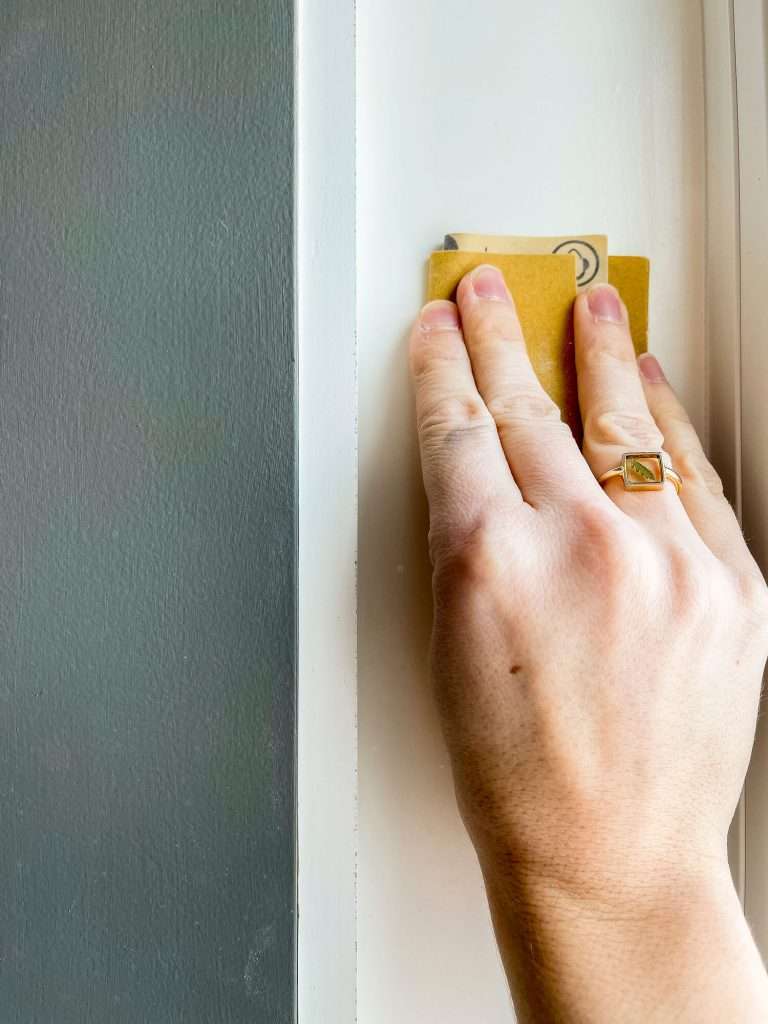
- Dust and vacuum your unabridged trim, including the top ledges, which are oft overlooked.
- Await for high spots from your repairs and sand them flush with 320 grit sandpaper, making sure to plume them out.
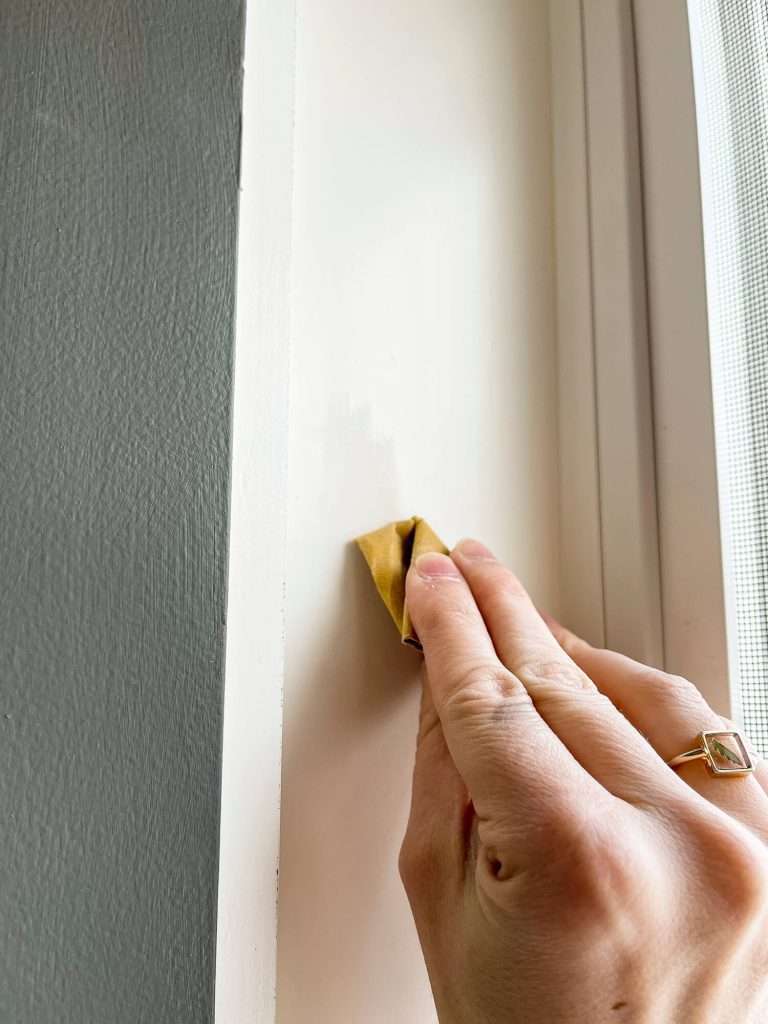
- Vacuum again, and and then use a tack textile or sponge and water to wash your trim fully.
Do I need to Prime number Before Painting Trim?
After y'all've prepared your trim for painting, yous may need to prime it. If y'all are painting over raw wood, yous will want to prime your trim before painting. This gives your last top coat the best adhesion and longevity.
All the same, if you are painting trim that has already been painted, you most likely do not need to prime. In cases where you are painting a light color over a night color, priming will help reduce the number of top coats you lot need to apply.
Just if yous are painting over a lite color, just give the baseboards a lite sanding to crude upwardly the existing paint. This will help create that smooth cease that we are looking for!
When Do I apply Caulk to Trim?
One of the about overlooked elements for getting a professional person finish when painting trim is caulking. Caulking fills in whatever gaps along the wall or window to give it a completed expect. You tin meet the divergence betwixt trim that has been caulked and trim that hasn't in my postal service on how to modernize a space with painted trim.
I prefer to use my caulk after priming, or if the trim has been previously painted, I utilise it after all of the prep piece of work is done but before my finish coats. This is a personal preference, but if you go this road make sure y'all are using paintable caulk!
Another option is to complete the painting process, and so do a stop step of caulking. This is totally acceptable too. I just prefer to caulk earlier painting so any color difference between my paint and the caulk isn't visible.
The Technique for How to Avoid Brush Strokes When Painting
And….finally! Hither we are! Are yous set up for the painting techniques for how to paint trim without brush strokes? I bet you didn't know there were and then many decisions to be made. But in reality, everything we talked about so far will set y'all up for success and then that the side by side few tips and tricks are attainable.
3 Tips and Tricks for Painting without brush strokes
- Tip: Slap your pigment brush on the side of the paint bucket instead of wiping off the tip. This keeps the castor bristles loaded then paint is being practical to your trim rather than bare bristles streaking across information technology.
- Go with the grain. In any painting project, trim included, paint with the grain of your wood rather than across it. This ensures the smoothest stop.
- Cut in beginning, then paint the middle. Practise this in curt 2 foot increments, rather than cutting it everywhere first and and so coming back and doing all the center portions.
Painting Trim Method
The basics of how to paint trim after it has been prepared and primed, if needed, are:
- Cutting in
- Pigment the middle
- Don't over-brush
- Feather out
- Never offset a brush stroke on applied paint
Working in two-3 foot sections, use your angled brush and dip information technology nearly an inch into the paint. Y'all never need to dip your brush more than than halfway up the bristles every bit that will overload it too much.
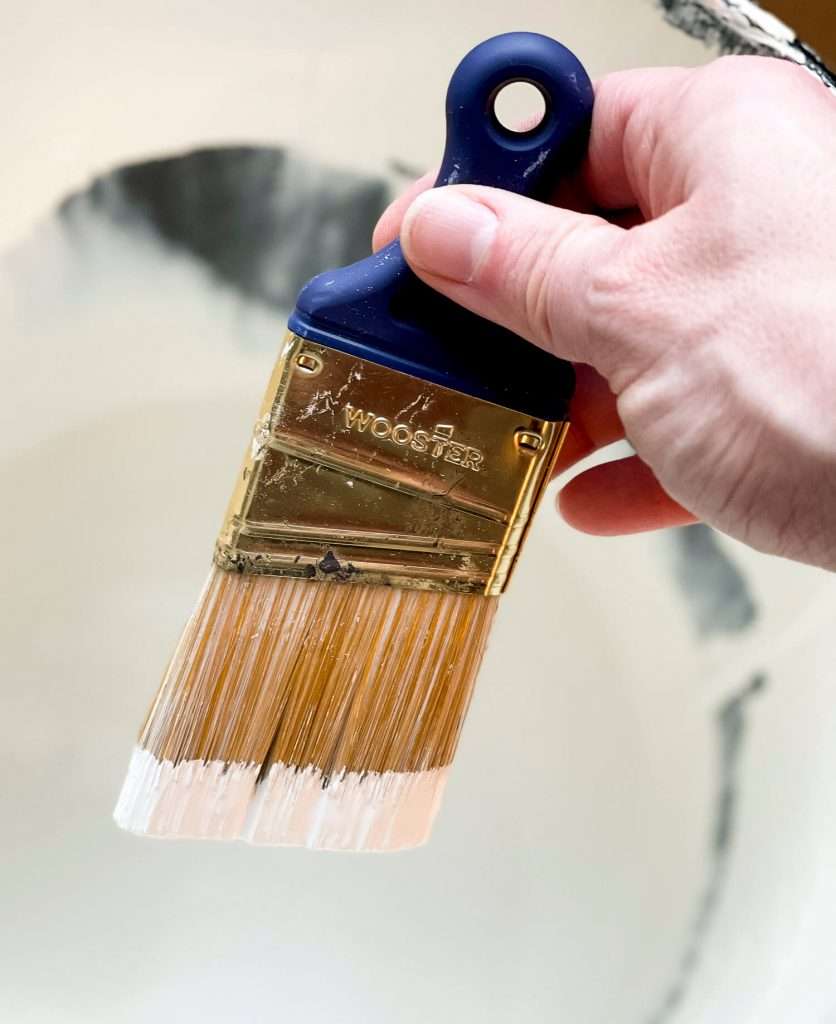
Slap off the excess pigment and then cut in along the edges and on top/bottom of baseboards. Then, come back and fill in the middle. Hold your brush at an angle, and gently swipe your castor across the surface. Using this motion, rather than applying it direct on, will avoid whatever dab marks.
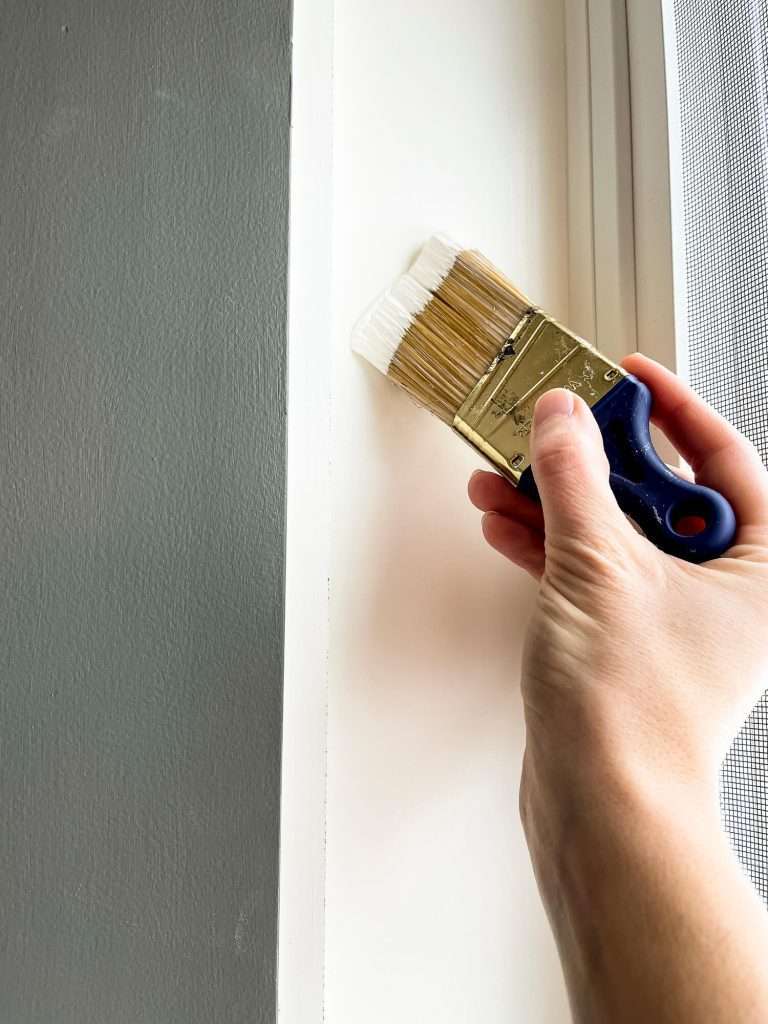
Do not apply too much pressure as you lot paint, just rather let the paint do the work of self-leveling every bit it dries. Many people think that brushing harder volition smooth out the paint, simply it actually does the reverse.
Similarly, make certain not to over-brush. This simply ways, one time you've practical a stroke of paint, don't brush back over it more 2-iii times. If yous do this, you lot volition spread your paint too thin, causing brush strokes to be visible.
Along those same lines, ensure that you are feathering out your start/terminate points. One time you lot've finished a 2-three foot department, move two-3 feet down your trim and repeat, working backwards towards your already painted trim. Never offset your brush stroke on already practical paint as information technology will prove that starting signal.
When yous meet in the centre from applied paint to fresh pigment, feather out your brush strokes with an up sweeping motility.
Repeat this process for all of your trim with a commencement coat, making sure not to overload your brush, which can crusade drips.

One time your first coat of paint is dry, lightly sand with 320 or 360 grit sandpaper. Most people skip the sanding stride betwixt coats, but this will give you lot the smoothest finish.
Next, repeat the same process with your cease coat of paint. About trim simply requires two coats of paint. If you are painting over a dark color and didn't prime, it may require three.
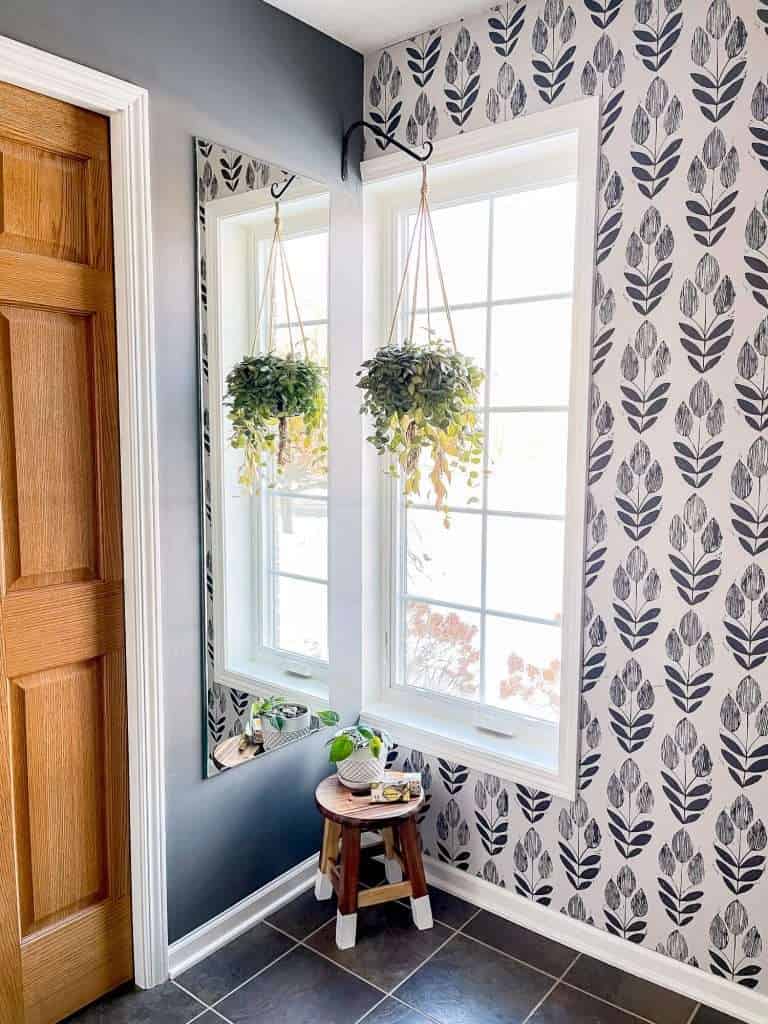
New Windows with Painted Trim
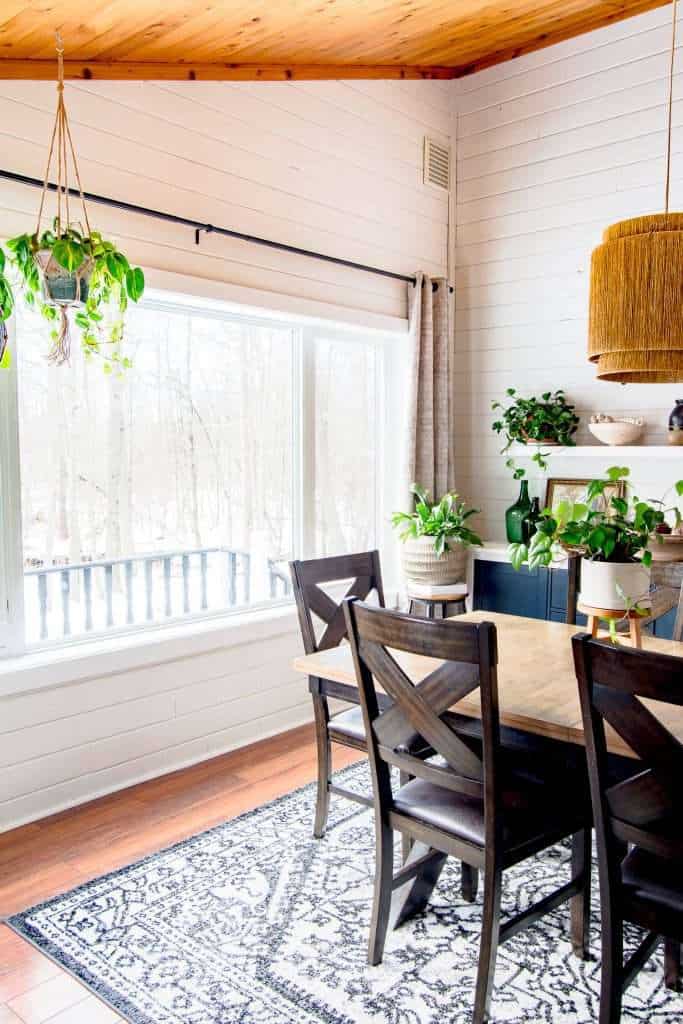
I decided to tackle this topic on the blog because nosotros recently had all of our windows replaced! Much of the trim, which was already painted, got dinged upwardly and marred, or had dirty spots from the install. Plus, some windows had the wrong trim color installed, that needed to be repainted. Bummer…
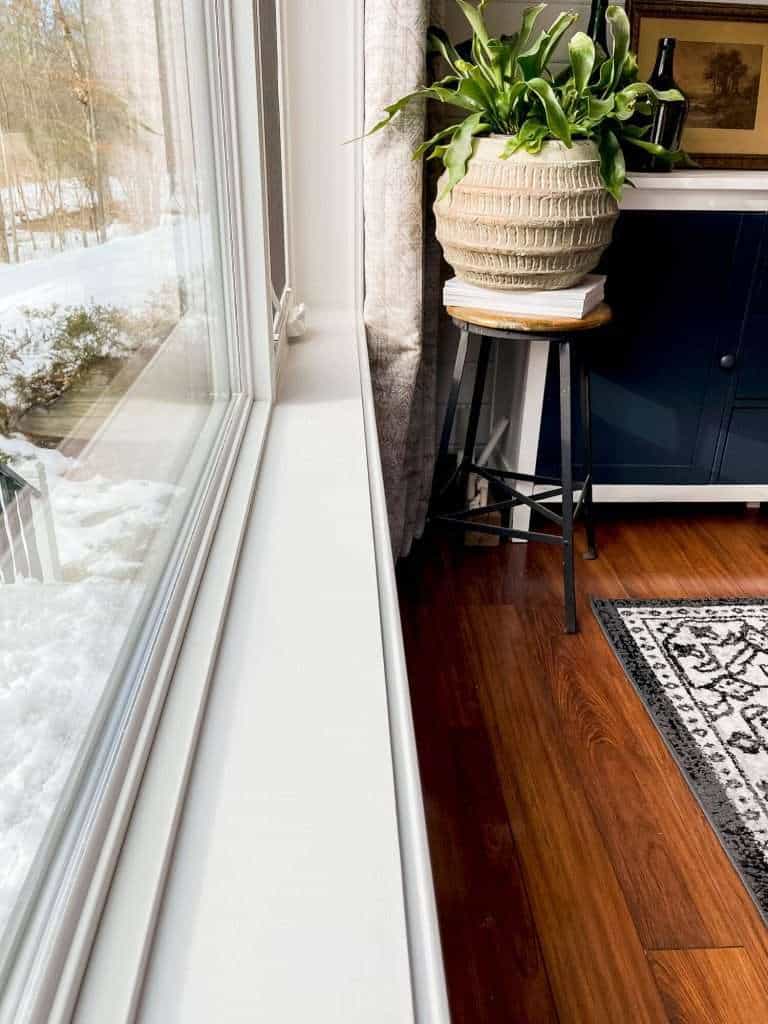
So information technology needed a fresh coat of paint. You tin see how well the bath and dining room painted trim turned out. At present on to the residual of the house!
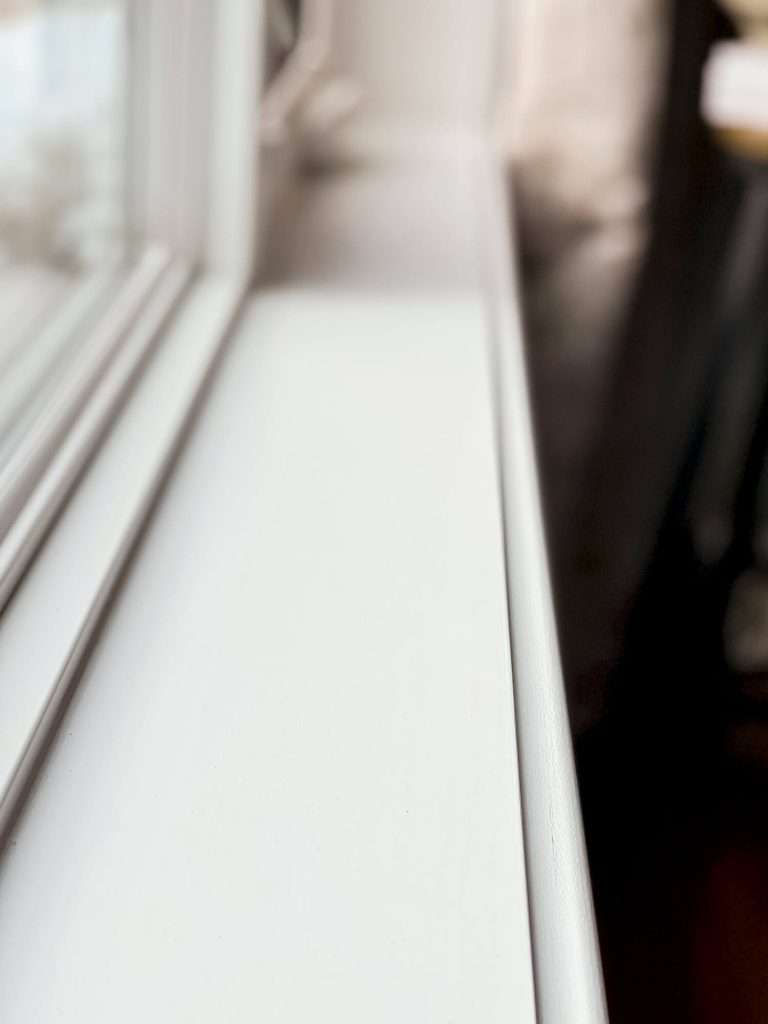
Y'all're Ready to Pigment Trim!
I hope that this article on how to paint trim without brush strokes has been helpful to yous!
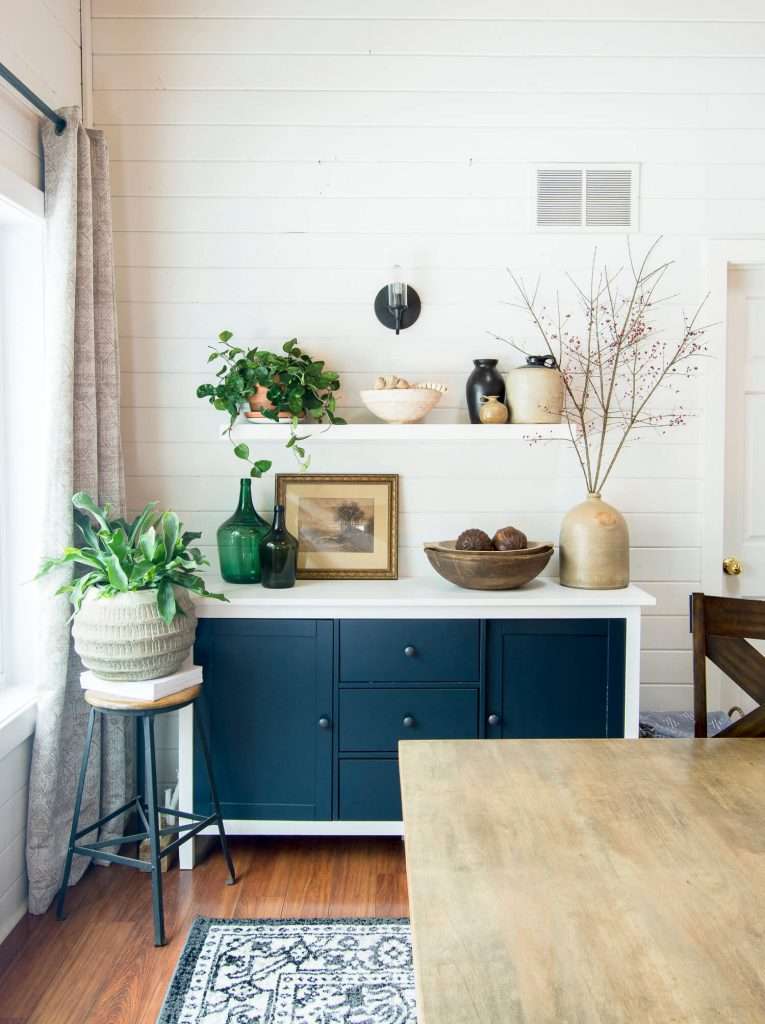
If you lot're looking for more painting tips, cheque out these articles beneath!
- How to Modernize a Home With Painted Trim
- How to Pigment Windows Without Record
- How to Paint a Deck
- How to Pigment a Tile Backsplash
- How to Paint Kitchen Cabinets
- How to Paint Shiplap Cracks and More
- How to Paint Interior Walls in 5 Steps
- How to Paint Trim Without Brush Strokes



Source: https://graceinmyspace.com/best-tips-for-how-to-paint-trim-without-brush-strokes/
Posted by: steelplam1994.blogspot.com
0 Response to "How To Clean Piano Black Trim Without Scratching"
Post a Comment